Craft & Heritage
The Architecture Behind Jaipur's Patterns
Arches, screens and a planned city: how Jaipur's built environment shapes a visual language.
· 2 min read
Jaipur was founded in 1727 by Maharaja Sawai Jai Singh II. Unusually for its time, it was a planned city: broad, straight streets laid out on a grid of rectangular sectors, with markets lining the main avenues. The planning is commonly credited to the architect Vidyadhar Bhattacharya and drew on traditional Indian principles of town planning. In 2019 the walled city was inscribed on the UNESCO World Heritage List.
The jharokha
A jharokha is an enclosed balcony that projects from a building's upper storey, typically supported on brackets and roofed with a small canopy. It allows those inside to look out onto the street while remaining largely unseen, and it shades the façade below. Repeated along a street front, jharokhas give a building its rhythm of projection and shadow.
Jaipur's best-known example of the form is the Hawa Mahal, built in 1799 during the reign of Maharaja Sawai Pratap Singh. Its façade is composed of tier upon tier of small windows and screens.
The jaali
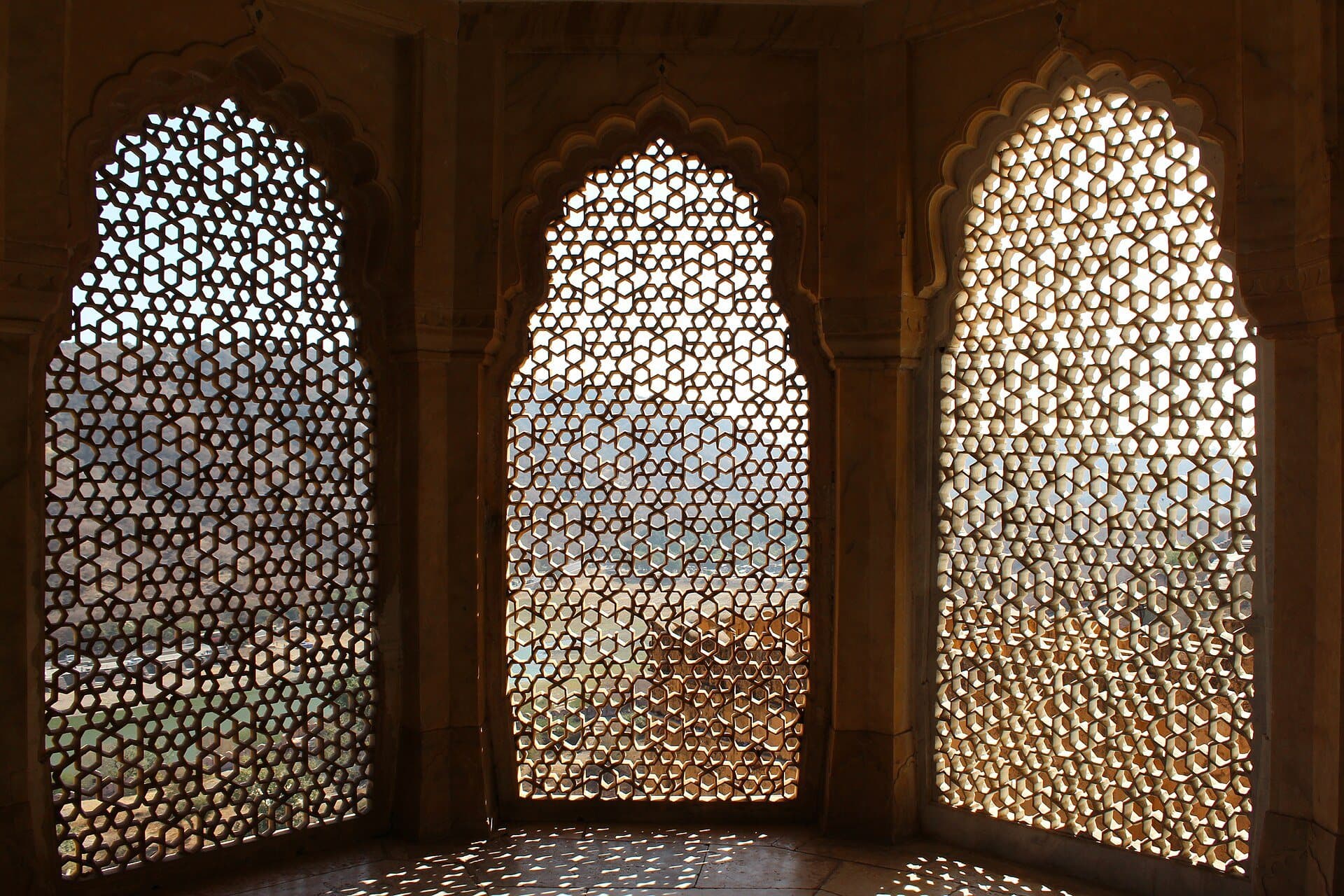
A jaali is a pierced screen, carved from stone or built up in other materials, forming a geometric or floral lattice. It filters light and allows air to move while preserving privacy. In strong sun, a jaali projects its own pattern across the floor — one of the most beautiful effects in Rajasthani architecture, and a recurring image in our own visual work.
The cusped arch
Many arches in the region are not smooth curves but are formed from a series of small lobes, or cusps. The result is a richly modelled outline that reads clearly in both strong light and deep shadow.
Colour
The old city's characteristic terracotta-pink wash dates from the nineteenth century. It is widely associated with preparations for the 1876 visit of the Prince of Wales. Many façades combine that ground with fine white line ornament outlining arches and openings.
From building to strap
Our Jharokha studies take three ideas from this architecture — the cusped arch, the repeated bay, and the play of line against shadow — and abstract them into a single fine line on a narrow strap. We do not reproduce any specific building. The aim is to carry the rhythm of the city, not its monuments.
Find a strap that fits.
Explore the collectionFurther reading
All stories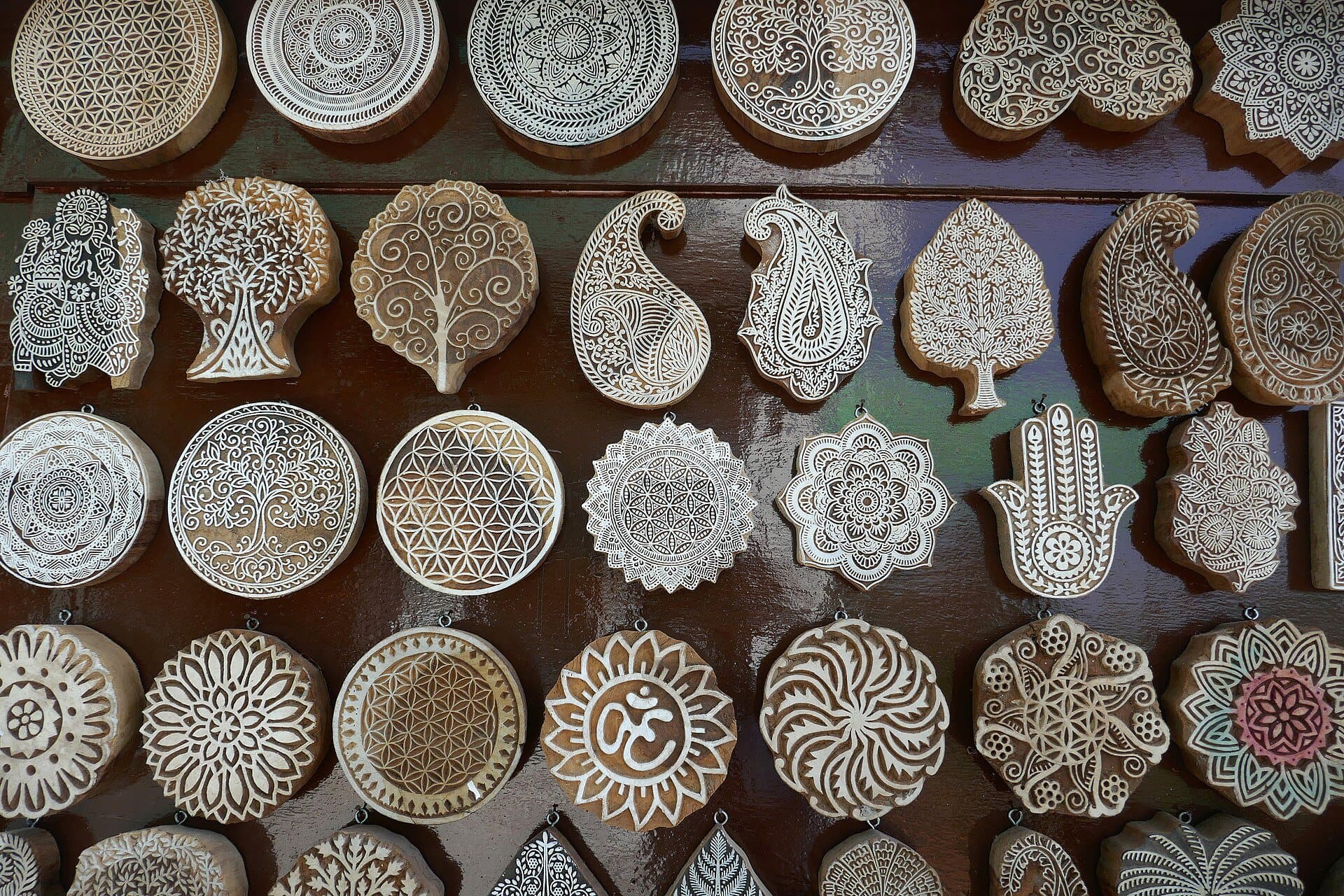
The Art of Sanganeri Printing
Fine florals, careful registration and a town just south of Jaipur — an introduction to one of Rajasthan's best-known textile traditions.
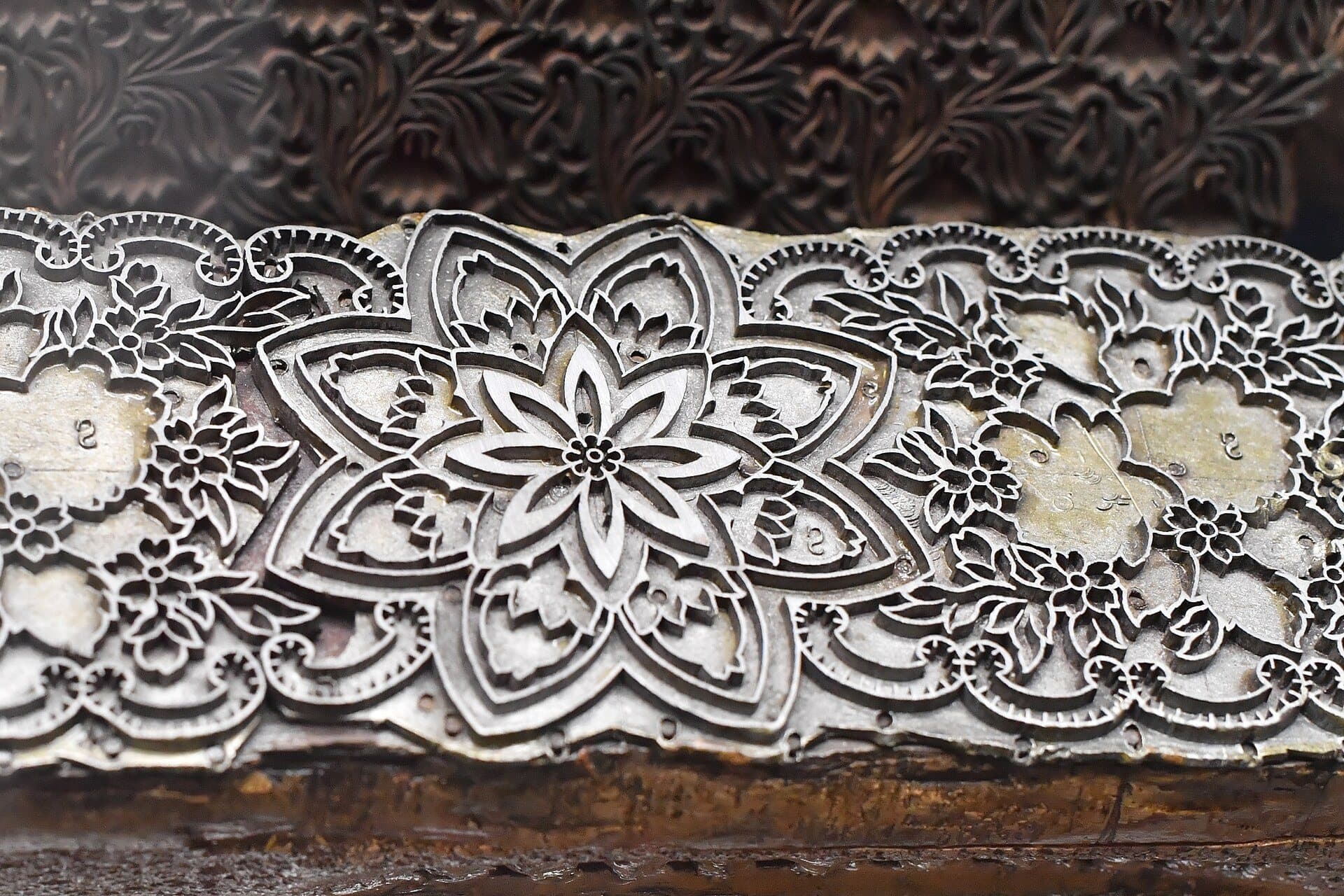
The Story of Traditional Block Printing
Wood, dye and repetition — the processes behind Rajasthan's block-printed textiles, and why provenance matters.

How to Measure Your Watch's Lug Width
The single most important number when buying a replacement strap — and the three ways to find it accurately.